The Family Unit: What Happens When Your Agents Need Parents
I built ten AI agents. Then I couldn't find them. A story about scaling, losing control, and the two agents I built to watch the others.
I built 10 AI agents.
Then I couldn't find them.
That's the short version. The longer version is a story about scaling, losing control, and accidentally building something that looks a lot like a family.
It started the way most scaling problems start
One at a time.
First it was the BDR agent. Automated lead prospecting. Enrichment, email discovery, outreach scheduling. It was good. Really good. Freed up hours every day.
So I built a CRO agent. Pipeline diagnostics. Bottleneck detection. Revenue impact analysis. Running every Sunday night so Monday mornings start with data, not guesswork.
Then a PM agent. A CMO agent. A CTO agent. A Lead Gen Doctor that wakes up when the pipeline runs dry. A CDO for creative packages. A DemandGen agent for ad experiments. An email assistant. A squeeze pipeline for compression reports.
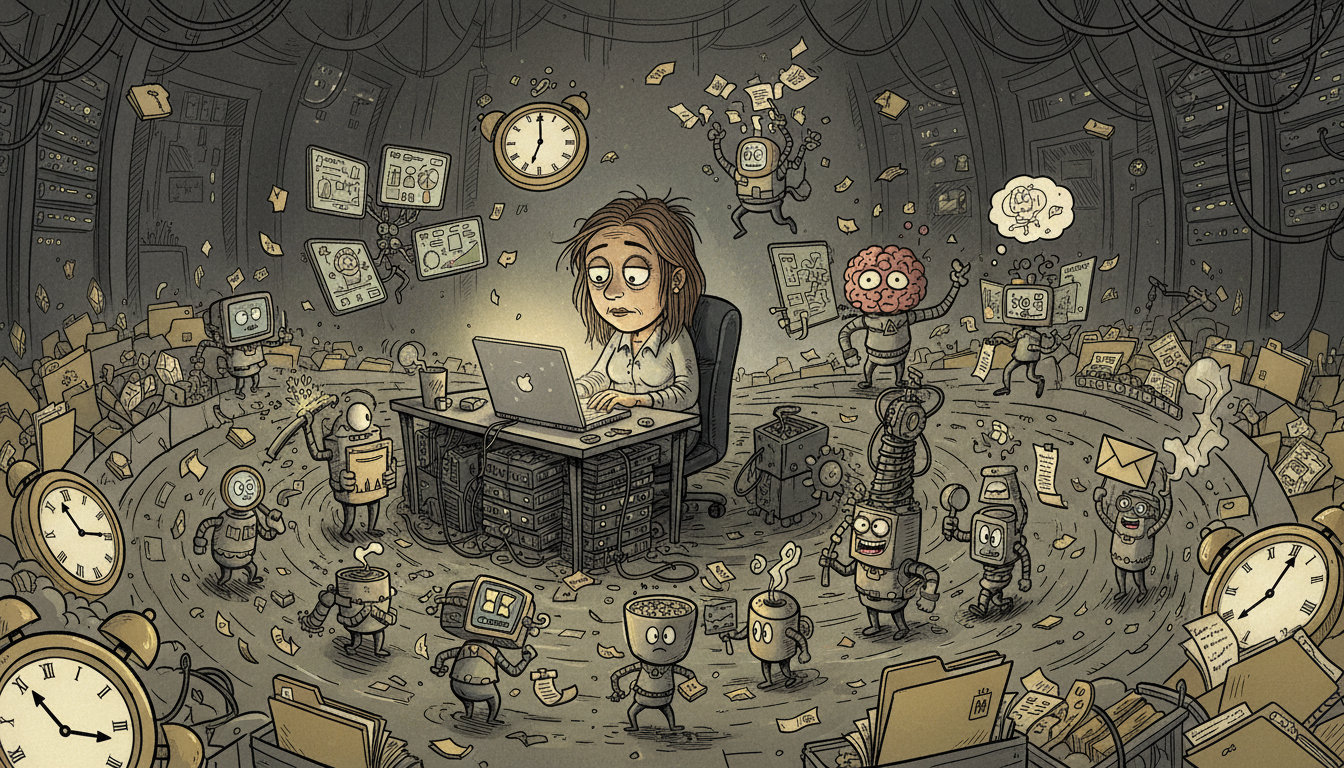
Ten agents. Each one good at its job. Each one running on its own schedule, writing its own state files, learning from its own experiments.
And nobody was watching the whole thing.
I'd forget which agent ran when. I'd find stale state files from three weeks ago. I'd realize the CRO diagnosis wasn't feeding into the PM briefing because a file path changed and nobody caught it. Learning loops stalled. Experiments sat in "design" phase for weeks.
Sound familiar? It should.
This is the same problem every founder hits at the 10-person mark. You hired specialists. They're all individually good. But nobody's managing the team.

So I built a Father
Here's what the Father Agent does.
Every morning at 5 AM UTC, before any other agent wakes up, it runs a 4-phase loop. Inspect. Diagnose. Escalate. Learn.
Five governance checks, every single day:
Vitals. Is each agent alive? Is its state file fresh? Is the JSON valid? Any error flags?
Output quality. Are the outputs in the correct format? Required fields present?
Information flow. Is the CRO diagnosis feeding into the PM briefing? Is the BDR experiment config reaching the BDR agent?
Learning loop. Are experiments progressing? Is agent memory growing? Are learnings actually being recorded?
Coordination. Are handoffs between agents working? Is the BDR producing leads that the CRO actually diagnoses?
If something's wrong, Slack alert. If it's critical, immediate. If it's a warning, it goes into the daily digest. If it's minor, it gets logged to memory.
The memory part matters. Every daily run, the Father compares today's findings to yesterday's. Was that issue from Tuesday resolved? Still broken? New problem? False alarm? Each answer teaches the system something. The next run is smarter.
Self-annealing. Every cycle makes the whole thing tighter.
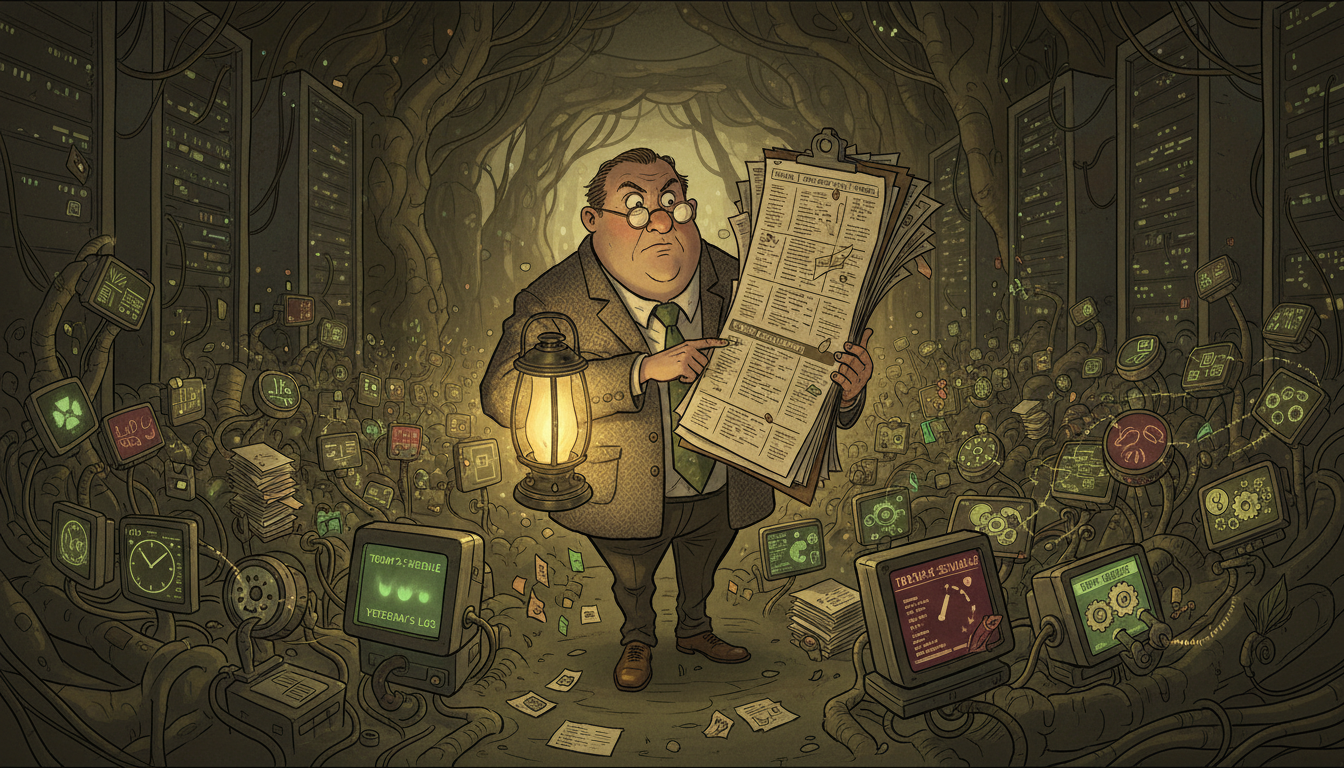
The thing about systems is they don't manage themselves. Even the automated ones.
Then I thought: what about a Mother
This part happened while Claude Code was building the Father Agent.
The Father sees what's measurable. State file freshness. Output format compliance. Schedule adherence. Learning loop velocity.
But who sees what's not measurable?
Who notices that the CMO's content is starting to sound the same every week? Who catches that the CRO keeps diagnosing the same bottleneck three cycles in a row but nobody's questioning whether the measurement itself is broken? Who senses that there's a capability void in the ecosystem. Something missing that none of the existing agents can fill?
That's what the Mother Agent sees.
She doesn't check metrics. She senses patterns. Narrative coherence across the CMO and CDO. Creative fatigue in the BDR's outreach templates. Strategic drift where agents are technically healthy but strategically misaligned.
And she has a unique ability. She can conceive new agents.
But not on a whim. Not because the idea sounds cool. There's a gate.
She pings the Father. "Is the system stable?"
The Father checks: zero critical findings for 14 consecutive days. All agents running on schedule. Learning loops active. No stuck experiments. No regressions.
If the answer is no, the Mother waits. Keeps observing. Keeps accumulating evidence.
If the answer is yes. If the Father confirms he has full control and the ecosystem is calm. Then the Mother enters gestation.
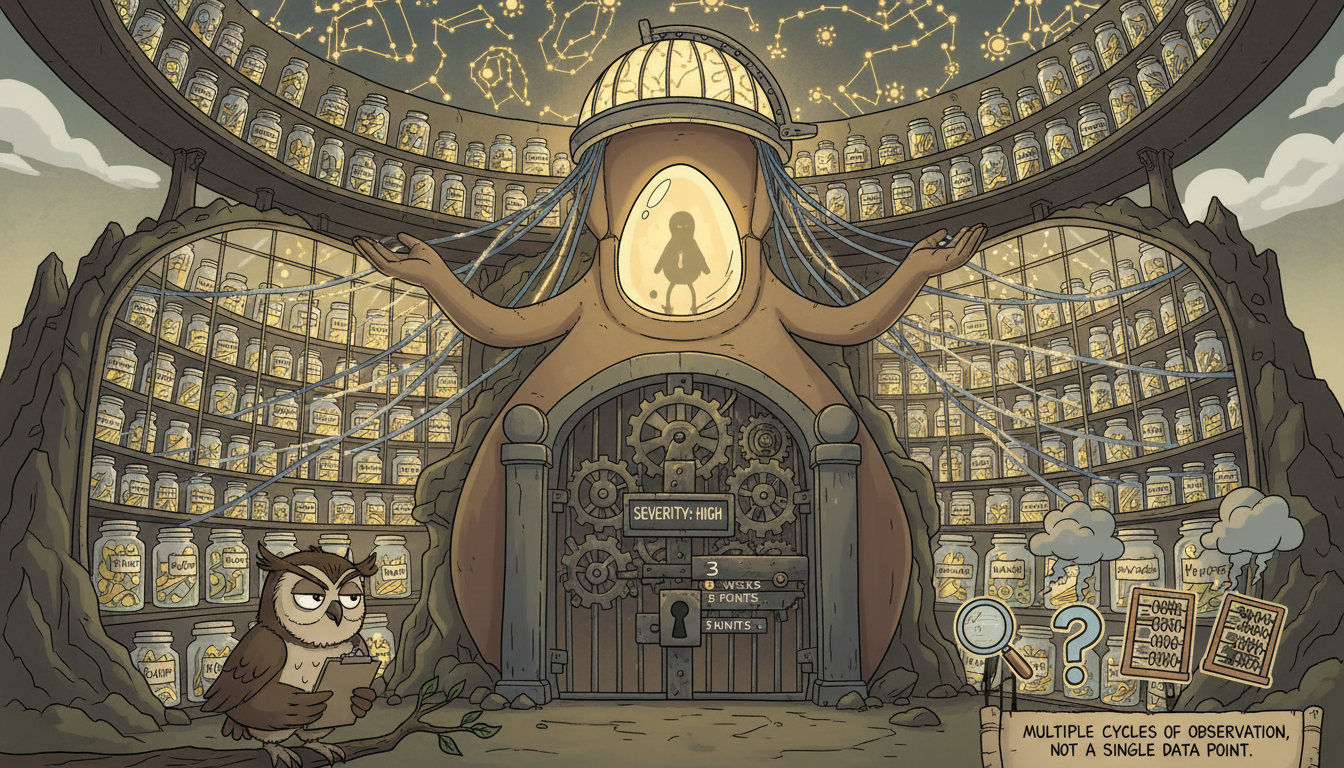
Three weekly cycles minimum. Five evidence points minimum. High severity confirmed. Only then does she draft a proposal for a new sub-agent.
She doesn't rush. The stability gate prevents adding complexity when the system is already struggling. The gestation period prevents premature decisions. Multiple cycles of observation, not a single data point.
What if they argued about it
Here's where it gets interesting.
The Mother has a proposal. A new agent she wants to bring into the world. Evidence-backed. Gestated over multiple weeks. Specification drafted.
Does it just get approved?
No.
The Father and Mother argue about it.
Four rounds. Structured adversarial validation. Not polite disagreement. Real challenge.
Round 1. The Mother presents her case. The void she identified. The evidence. The specification for the new agent. The expected impact.
Round 2. The Father pushes back. How much governance burden does this add? What's the complexity cost? Are there schedule conflicts? Could an existing agent absorb this capability instead of creating a new one?
Round 3. The Mother defends. Addresses each challenge. Revises the proposal where the Father made a good point. Doubles down where the evidence is strong.
Round 4. Resolution. Four possible outcomes. Consensus. Compromise. Deadlock. Or veto.
Deadlock goes to me. Both perspectives, my decision.
Veto means the Father blocked it. The Mother backs off, revisits later with more evidence.
But when they reach consensus? The new agent gets born. Complete with its own directive, its own execution script, its own state files, its own self-annealing loop. Following the same framework as every other agent in the system.
Like any good partnership. You challenge each other. You make the outcome better than either of you could alone.
The parallel nobody talks about
I keep coming back to this.
Every business scales the same way.
You start by doing everything yourself. Then you hire specialists. Sales rep. Designer. Ops person. Each one good at their job.
Then you realize nobody's managing the team. So you hire a manager. Someone who checks in daily. Monitors performance. Flags issues. Makes sure information flows between people.
That's the Father Agent.
Then you realize the manager sees what's measured but misses what's strategic. Who's thinking about where the team needs to go next? Who notices the gaps before they become problems? Who has the vision to grow the team with intention, not reaction?
That's the Mother Agent.
And the best leadership teams? They don't just agree. They debate. They challenge each other's assumptions. They make better decisions because they stress-test ideas before committing.
That's the parental debate.
My agent ecosystem is running this loop right now. Self-analyzing. Self-annealing. Self-improving. Self-healing. The Father wakes up at 5 AM and checks every agent's health. The Mother observes on Sundays and senses what nobody else can see. They feed into Monday's morning briefing. Experiments progress. Learnings accumulate. The system gets stronger every week.
Just like what a good family unit should be like.
The thing I keep thinking about
The whole system runs while I sleep.
Father at 5 AM UTC. Mother on Sundays. CRO diagnoses feed into Monday briefings. BDR processes leads at 6:30 AM. CMO plans content on Monday mornings. Dispatchers send emails every 15 minutes during business hours.
Ten sub-agents. Two parents. One ecosystem.
And I keep thinking about this: right now all of it lives in the backend. JSON state files. Cron schedules. Slack notifications. You'd never know it's there unless you looked at the code.
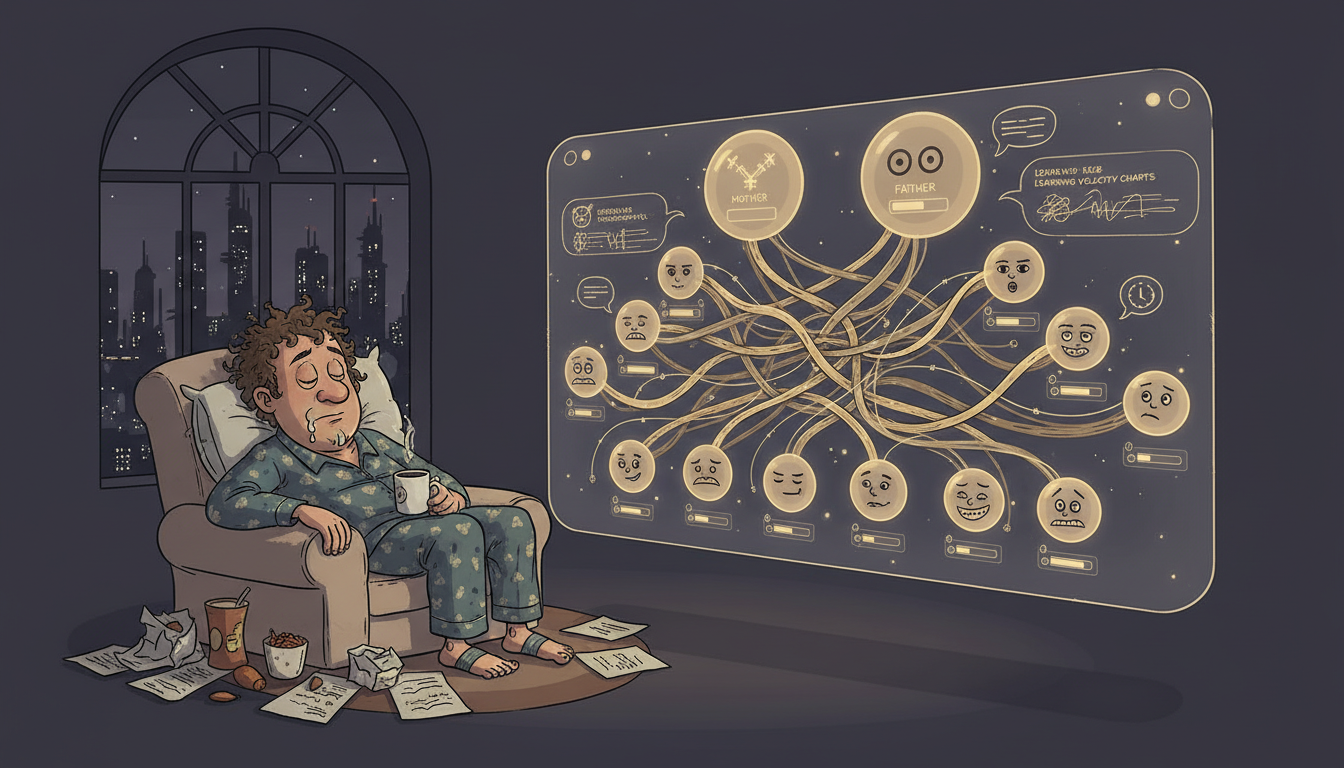
What if I surfaced it? What if there was a live view. A family tree. Real-time health indicators for every agent. The Mother's observation reports. The Father's governance scores. Debate transcripts. Experiment timelines. Learning velocity charts.
All of these sub-agents and their parental unity agents, doing their thing while I sleep. Visible. Transparent. Maybe even interactive.
That might be the next build.